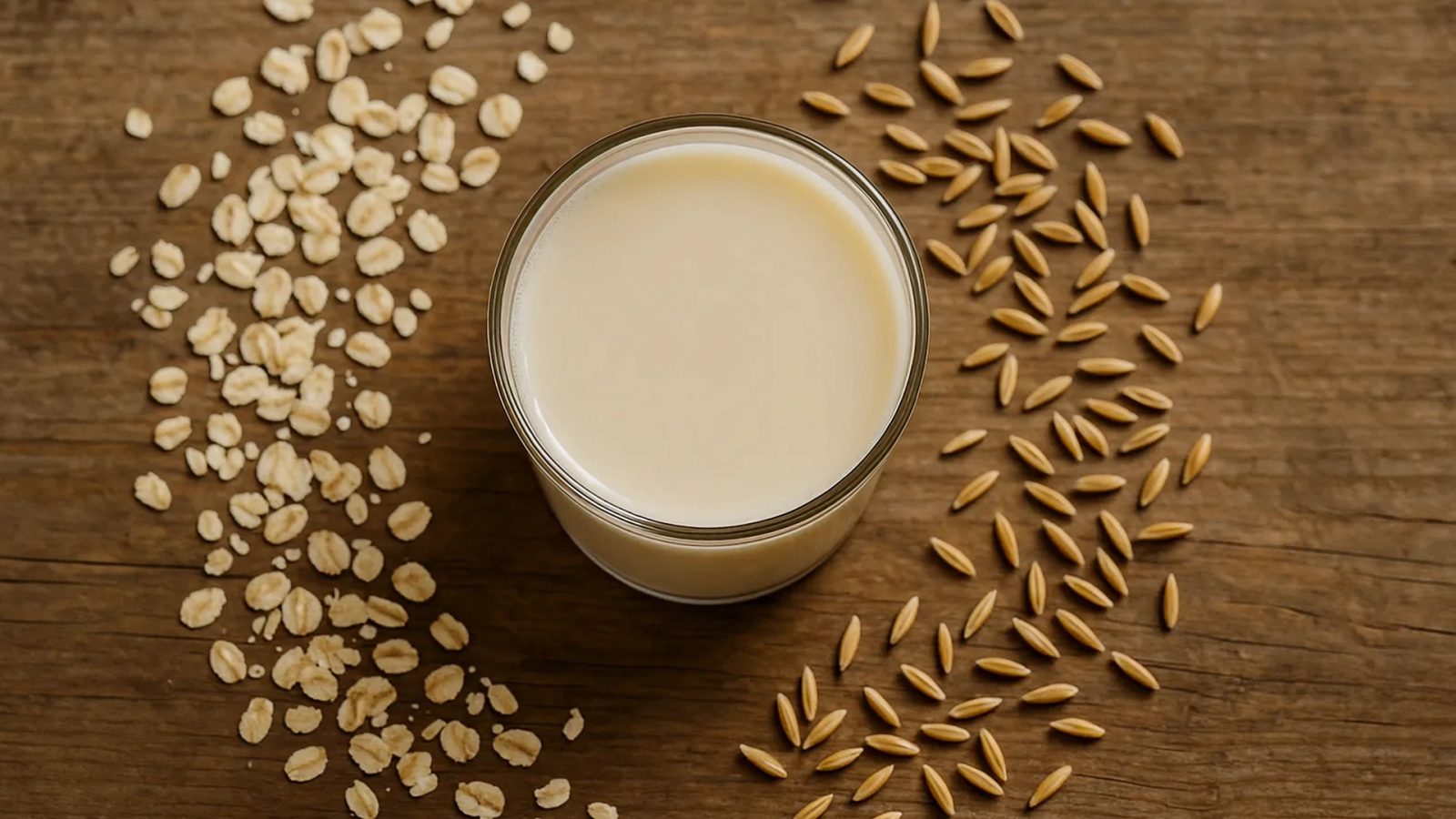
This is the oldest, plainest ritual in this Library, and arguably the best evidenced: oats, suspended in warm water, left to do very little except sit against skin that needs calming down. No essential oils, no fragrance, nothing to prove. Just the ingredient the FDA itself recognises, used almost exactly as it has been for centuries.
It is tempting, writing for a Library built around evidence and chemistry, to over-engineer a ritual, to add three actives and a rationale for each. This one resists that on purpose. Colloidal oatmeal’s own clinical evidence, covered in full in the Oats monograph, was generated using something close to plain oats in water, and a home bath soak that stays close to that same simplicity is, honestly, the more faithful ritual than a more elaborate version would be.
Making the oat milk
Makes
Enough for one bath
Prepare
5 minutes, plus 10 minutes standing
You will need
- 1 cup rolled or old-fashioned oats (not instant, which contain added sugars and flavourings not wanted here)
- A muslin cloth, clean sock, or fine sieve
- Warm, not hot, bathwater
Method
-
Grind, briefly
Pulse the oats in a blender or food processor for a few seconds, just enough to break them into a coarse, fine-ish powder rather than a true flour. This is a rough approximation of true colloidal oatmeal’s fine, stable milling, close enough for a home bath, without needing pharmaceutical-grade processing equipment.
-
Tie or sieve
Tip the ground oats into the muslin cloth or sock and tie it closed, or, if using a sieve, hold this back for the next step instead. Either method keeps the coarser oat particles out of the bathwater itself while letting the fine, milky starch and beta-glucan-rich liquid through.
-
Steep in warm water
Run a warm, not hot, bath, since hot water is more drying to skin regardless of what is added to it, and drop the tied bundle directly into the running water, or, if not using a bag, stir the ground oats loose into the bath and accept a slightly less tidy tub. Either way, let it steep for a few minutes; the water should turn a faint, milky white.
-
Soak
Get in, and simply stay for fifteen to twenty minutes, occasionally squeezing the bag if using one to release more of the milky liquid. There is no technique required beyond being in the water.
Afterwards
Pat skin dry rather than rubbing, leaving it slightly damp, and follow with a plain, fragrance-free moisturiser while that dampness is still there, the same damp-skin principle behind most of the moisturising rituals in this Library, and covered in more depth in our Skin Barrier guide. Avoid scrubbing the skin with a towel or flannel immediately after; irritated skin, which is generally the reason for reaching for this ritual in the first place, does not need additional mechanical stress on top of a soak meant to calm it.
When to reach for this
This is a genuinely good option for generalised dry skin, mild eczema flares, sunburn discomfort, or simply a stretch of cold, dry weather that has left skin feeling tight and reactive. It is not a substitute for medically directed eczema treatment where that is needed, a distinction covered honestly in the monograph, and anyone with broken or actively weeping skin should check with a pharmacist or doctor before soaking it in anything, oats included.
Continue exploring
Botanical Archives · No. 009
Oats, the Grain Nobody Agreed About
The centuries-old history behind this exact bathwater habit, and how it eventually earned formal medical recognition.
Journal · Skincare
The Skin Barrier: What It Is, How It Works
Why damp skin, not dry skin, is the right moment to moisturise, and what a healthy barrier is actually made of.
Botanical Library · Monograph No. 009
Oats
The clinical evidence behind this exact, unglamorous soak: barrier repair, itch relief, and the FDA’s own skin protectant recognition.
Safety note
Use rolled or old-fashioned oats, not instant oats, which contain added ingredients not wanted in bathwater, and choose a certified gluten-free oat product if coeliac disease or gluten sensitivity is a concern for anyone bathing. Avoid on broken or actively weeping skin without checking with a pharmacist or doctor first, and exit the bath carefully, since oat-milked water can leave the tub slightly slippery.