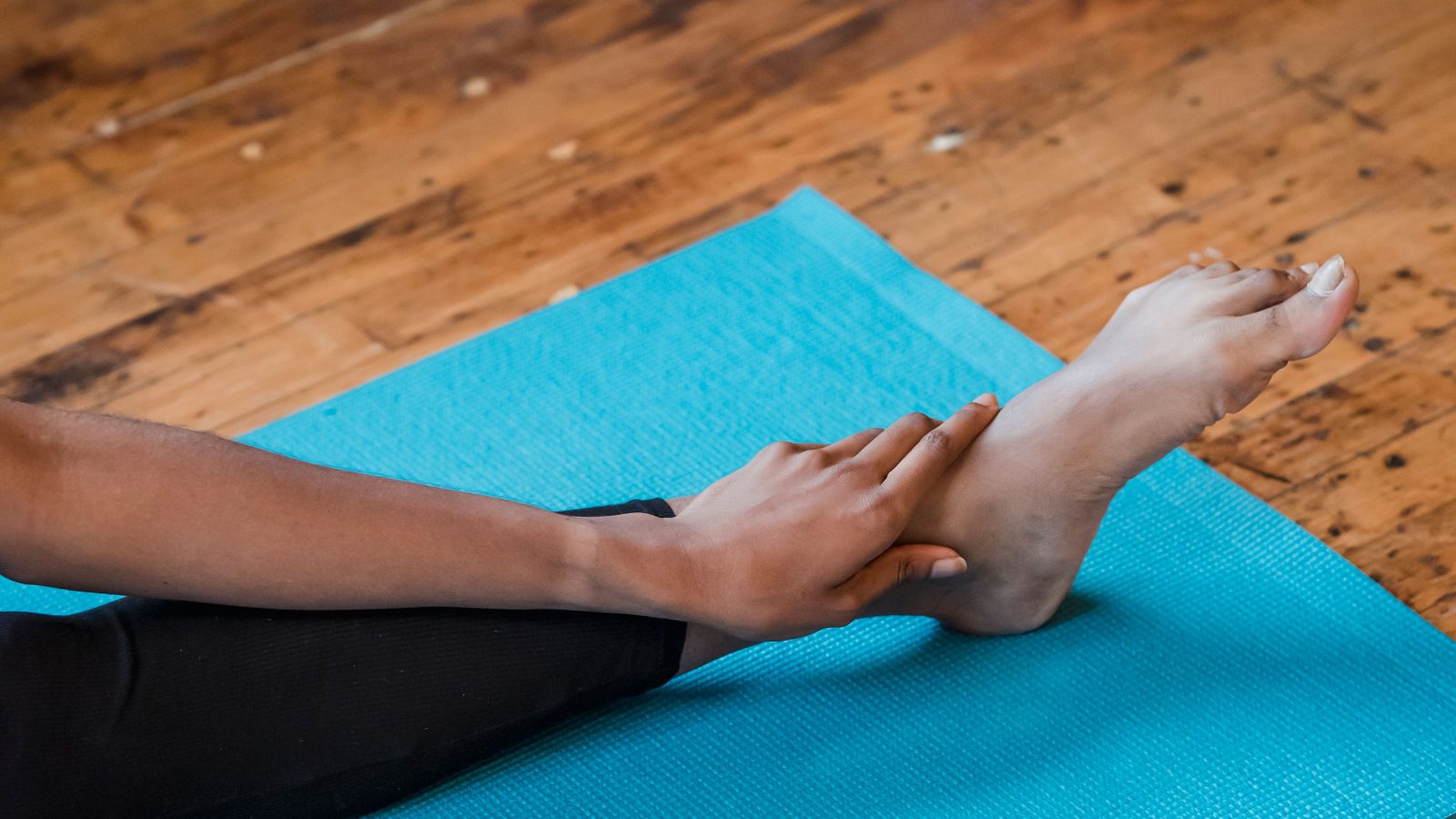
For my fiftieth birthday I have bought myself something I did not expect to buy: a Callanetics instructor training course. I have practised the method for thirty seven years. I have never taught anyone anything. The point of the next six months is to change the second of those things.
This is also the first article in something I am committing to publicly, here on the blog. A four year project to write weekly, openly, about everything that goes into building Botanicals & Company, the skincare brand I plan to launch in 2030. The Callanetics training is the first concrete step. The rest, all roughly two hundred articles of it, will follow.
Why an instructor course, specifically
I want to address this up front, because there is a more obvious path. The obvious path is to book a course of weekly classes with a qualified teacher. A couple of hundred pounds, eight or ten sessions, eyes on my form, the alignment errors I cannot see in myself corrected by someone trained to spot them. That is what a sensible woman would do.
I am not going to do that. I am going to do the more ambitious thing, which is qualify to teach the method myself.
There are three reasons. The first is unembarrassedly selfish. The depth of understanding you acquire by teaching a method is entirely different from the depth you acquire by practising it. I have practised Callanetics since 1988 and I can still feel, when I am honest, that I am working at the surface of it. Having to cue someone else through the curl up sequence will force me to articulate things I have got away with feeling rather than thinking about for nearly four decades.
The second reason is brand related. Botanicals & Company will sit at the intersection of skincare, tea, movement and the kind of wellness that takes ingredients seriously rather than decoratively. If I am going to write about Callanetics in that brand, I would rather do so with credentials behind me. A qualified instructor writing about her own practice is more useful to readers than an enthusiastic amateur with thirty seven years of input and nothing official to back it up.
The third reason is plain enough. I want to teach. Specifically I want a small weekly class, in a borrowed studio or church hall somewhere local, made up of women in roughly my decade of life who have heard of Pilates but never of Callanetics, and who would like to know what it is and whether it might suit them better than what they are currently doing. I have an opinion about this. I would like to be allowed to act on it.
What the training actually involves
For anyone curious, the qualification is the CALLANETICS Foundation Instructor Training, run online by Precious Peach Ltd. under licence from Callan Productions Corp., which has held the trademark since Callan Pinckney’s death in 2012. The course costs 299 US dollars, plus a 150 US dollar annual renewal fee to keep the licence active through the Instructor Network for Callanetics (INC).
It is online and self paced. The recommended study time is around six weeks. The materials include a training manual, a series of video lessons, written modules, and quizzes. The final assessment is the part that interests me most. You record yourself teaching a full Callanetics class, submit the video, and a reviewer either passes you or sends you back to keep practising.
The modules cover:
- The core principles and history of the method
- The benefits of Callanetics and the physiology behind the pulses
- The Callanetics 5 Step Formula for cueing and coaching
- Class structure and sequencing
- Marketing tools and the practicalities of running classes
There are no prerequisites. Anyone over eighteen can enrol. There is no minimum number of hours of prior practice required, which is the part that gives me pause. It is, in principle, possible to buy this course, watch the videos, record a competent enough class, pass the assessment, and start teaching with very little real experience of the method. I would not want to take a class from that instructor. I doubt many of the existing certified teachers would either.
My response to that risk is to slow the timeline down. The recommended six weeks of study is too short for the way I want to approach this. My plan is twelve weeks. I want to work through the manual carefully, record myself teaching to camera, watch the playback (which is its own particular humiliation, but useful), refine, and only submit the assessment when the video is genuinely good rather than just passable. The licence becomes valuable to the extent that the work behind it is real.
Why I think I can do this at all
I should justify the leap, because going from home practitioner to instructor is not a small one.
I learned Callanetics in 1988, at twelve years old, from my mother’s VHS copy of 10 Years Younger in 10 Hours. I have practised the method on and off ever since, with periods of daily practice and periods of complete neglect. The longest gap was eight months after my second child was born. The longest stretch of daily practice was about four years through my late thirties. I know the original full hour programme by heart. I have done Beginning Callanetics, Super Callanetics, Quick Callanetics, Callanetics for Your Back, and most of what Callan filmed between 1986 and her death in 2012.
None of that makes me a teacher. It does make me an unusually well prepared student of an instructor course. I know what good Callanetics looks like from the inside. I can feel when a cue is working, both on myself and, when I have tried it informally on friends, on someone else. What I do not yet have is the language for what I am doing, the formal vocabulary for the cues, and the trained eye to spot the errors in someone else that I cannot see in myself. That is what the next twelve weeks are for.
Why Callanetics is the right method for women at 50
I will write more on the physiology in a separate post, but the short version is this. From around the time of perimenopause, the female body undergoes a predictable set of changes. Muscle mass declines, bone density declines, connective tissue becomes less compliant, posture rounds forwards, the pelvic floor becomes less reliable, joints become less tolerant of impact, and cardiovascular function becomes considerably more important than it was at thirty.
Callanetics addresses most of those, with the obvious exception of the cardiovascular one (for which I walk roughly thirty kilometres a week and intend to add some swimming). The pulses build deep muscle without joint impact. They load bone through muscular contraction against gravity rather than through impact, which is appropriate at this age. The method directly trains the postural muscles. The pelvic floor is recruited in almost every sequence, often without being named. It is, broadly, the closest thing to a single discipline answer to what the female body needs in midlife.
There is an obvious gap in the evidence here. There are no large randomised controlled trials specifically on Callanetics. The mechanistic case is strong, the forty year track record is strong, the peer reviewed evidence base is not. I am comfortable with that, partly because the same is true of plenty of long established movement practices that work in practice, and partly because the underlying principles overlap substantially with Pilates, for which the evidence base is far more developed. When someone in midlife asks me whether Callanetics is worth doing, I tell them yes, with the caveat that the trials have not been done. That is the honest position.
What is making me nervous
I should say this honestly, because nobody benefits from a blog full of confident projections. Three things are making me nervous about this.
The first is the camera. The assessment requires me to record myself teaching a full class. I have never recorded myself doing anything physical. The combination of seeing my own posture from the outside, hearing my own voice cueing other people, and submitting the result to an examiner is going to be an exercise in tolerating my own self consciousness. I expect to delete the first four or five attempts before submitting anything.
The second is the gap between knowing a method and teaching it. I have watched Callan teach for nearly four decades. I have a very specific sense of how a good Callanetics class should sound. The risk is that my internal standard, set against one of the great fitness teachers of the twentieth century, will make me unduly hard on my own early attempts. Some of that is appropriate. Some of it will be the kind of perfectionism that stops people doing anything new. I will need to spot the difference as I go.
The third is the cohort. The women I want to teach are women who have come to fifty wondering whether what they have been doing for their bodies is still right for them. They are not beginners to movement. They are not unfit. They are, in many cases, more experienced practitioners than I am of whatever they currently do. Standing in front of that room and asking them to trust me with a method most of them have never heard of is a particular kind of exposure. I am going to have to earn it.
The plan from here
Training starts the day after my birthday. The rough schedule:
- June and July: work through the manual and the videos. Practise the cues. Record. Watch back. Refine. Re read Callan’s own books alongside the modern training, because the older material has a particular voice I want to keep.
- August: submit the assessment video.
- September: assuming I have passed, find a small studio space and run a free pilot class for friends, so I can see how teaching actually feels rather than how I imagine it will feel.
- October onwards: a small weekly paid class for women in their forties and fifties, probably in a church hall in walking distance. For the first year the fees will go to a local women’s charity, because I am training as much as I am teaching and that feels right.
I will write up each stage. The honest version, including the version where I fail the assessment the first time and have to do it again. If that happens I will say so.
The wider four year journey
This Callanetics training is the first of several formal qualifications I am taking on between now and the launch of Botanicals & Company. The second, starting later in June, is the Foundations of Aromatherapy certification with The School of Aromatic Studies (the next post will cover that in detail). The third, probably in 2027, is a herbalism course. The fourth, somewhere along the way, is a proper introduction to Ayurveda. The fifth, which is non negotiable, is a cosmetic formulation qualification before any product carries the Botanicals & Company name.
I have spent the last twenty years reading about all of these things. The next four are about turning that reading into structured competence, and showing the working in public as I go. One article a week between now and the launch in 2030. That is roughly two hundred posts, covering Callanetics teaching diary entries, aromatherapy module summaries, ingredient deep dives, recipes, herbalism notes, and the occasional honest admission of what I have failed at recently. If you are reading this in 2026 and you are still reading in 2030, I would like to buy you a cup of tea.
For now, the mat is out, the manual is downloading, and the first cue I want to learn cleanly is the simple one Callan herself used to use, which is to drop the shoulders. I have heard her say it in my head for thirty seven years. The next step is learning to say it convincingly out loud.
Frequently asked questions
What is Callanetics and who created it?
Callanetics is a system of exercise built around small, precise, frequently repeated muscular movements and isometric holds, developed by Callan Pinckney in the 1980s and still taught today in something close to its original form.
Do you need any equipment to do Callanetics?
No. Callanetics is generally performed using body weight alone, typically on a mat, without the specialist equipment associated with practices such as Pilates.
Is Callanetics suitable for beginners?
Yes, its low-impact, small-range-of-motion approach generally makes it accessible to beginners and to people for whom higher-impact exercise is uncomfortable, though as with any new exercise programme, starting gently and building up is sensible.
Journal · Living Well
Callanetics Results: What Does the Evidence Actually Say?
An honest look at the actual research behind Callanetics, separated from the testimonials the method is usually sold on.