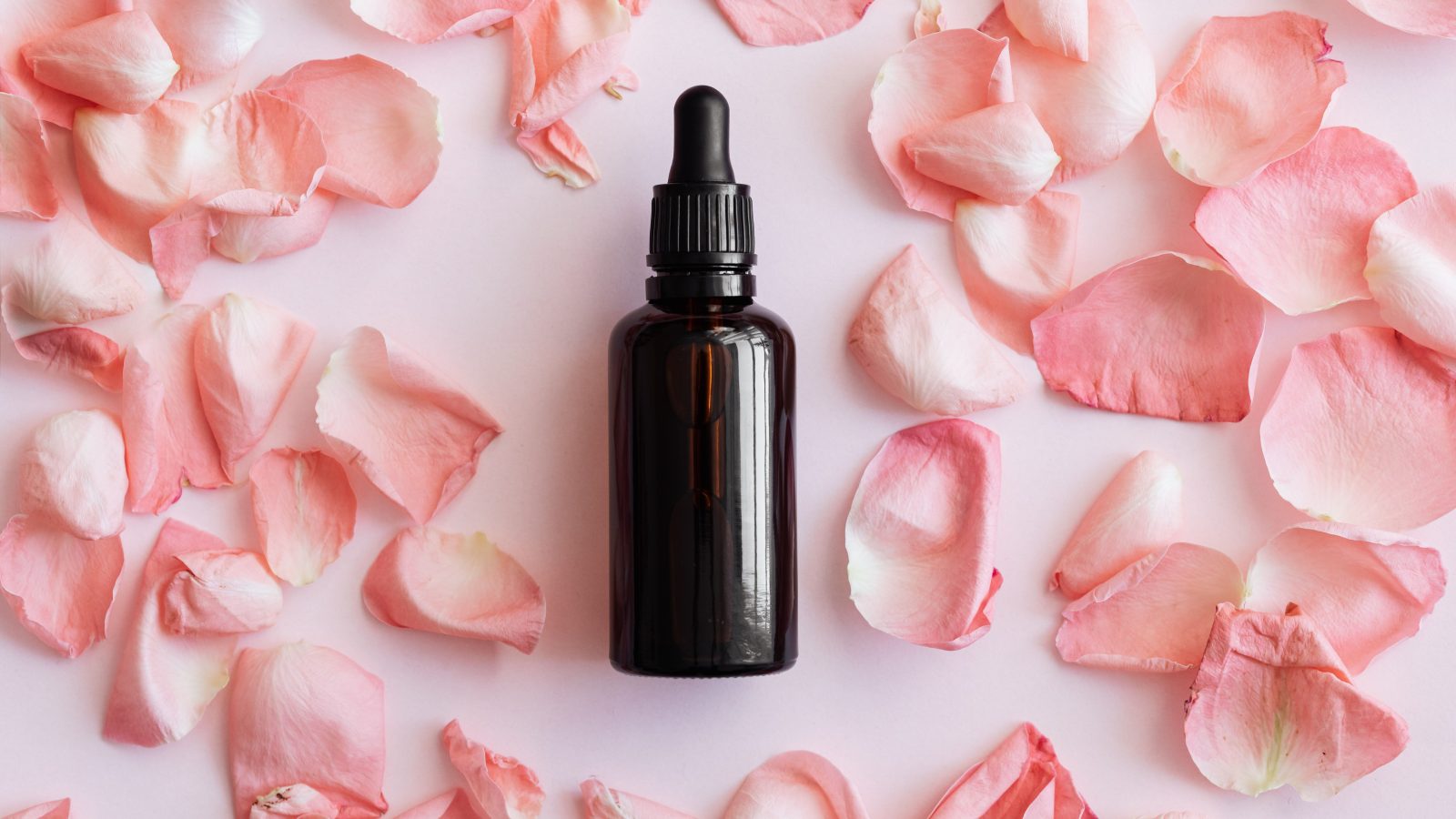
At fifty I have finally let rose into my skincare cabinet properly. I had been resisting it for years, partly on principle (the marketing around rose is some of the worst in cosmetics) and partly because I had not yet sat down and worked out, on the evidence, where rose actually deserves a place and where the claims for it run ahead of the data. This post is the note I made for myself before opening the bottle. It covers the species, the extraction, the chemistry, what the published evidence does and does not support, and how to use the oil sensibly. The references are at the end.
This is part of the ongoing ingredient work for Botanicals & Co, the skincare brand I plan to launch in 2030. Every ingredient that ends up in a formulation will get a post like this one first.
Two species, and the difference matters
Most of what is sold commercially as rose oil comes from one of two plants. Rosa damascena Mill., the Damask rose, accounts for the bulk of global production, with Bulgaria, Turkey and Iran the dominant cultivation regions [1,2]. The Bulgarian Rose Valley alone produces around half of the world’s true rose oil. Rosa centifolia L., the cabbage rose, is grown mainly in the Grasse region of southern France and is more commonly used in fine fragrance than in skincare.
The two species are not interchangeable. The aromatic profiles are different, the price points are different, and the regulatory context is different. For skincare formulation, the species you almost certainly want is Rosa damascena, harvested by hand at first light (typically late April to early June, depending on latitude), and steam distilled within hours of picking. The volatile aromatic compounds dissipate as the petals warm up, which is why pickers are out before sunrise. A skilled picker brings in roughly fifty kilograms of petals in a morning [1].
The name Damask is a corruption of Damascus, which gives a sense of the plant’s lineage. The Damask rose was being cultivated for its oil in Persia by the eleventh century, which is older than most things in modern cosmetics by a comfortable margin [3].
Three things called rose, and only one of them is what we mean
Confusingly, the cosmetics aisle uses the word rose for three different ingredients. They are chemically and functionally distinct, and the labelling is rarely as clear as it should be.
Rose otto is the essential oil produced by steam distillation, usually a double distillation, of fresh petals. Yields are very low. Peer reviewed sources put the figure at around one part oil per three to five thousand parts petals by weight, which works out at roughly three to five kilograms of petals per gram of oil [1,3]. This is the principal reason a small bottle costs what it costs.
Rose absolute is produced by solvent extraction, typically with hexane, followed by an ethanol wash to remove non aromatic plant material. The aromatic profile is broader and the colour deeper than rose otto. The absolute is cheaper to produce and dominates fine fragrance applications, but trace solvent residues are a regulatory consideration in skincare formulation [1]. I prefer rose otto for topical work, partly for that reason and partly because the steam distilled profile suits the way I want to use the ingredient.
Rose water is the aqueous fraction produced as a by product of steam distillation. It contains the water soluble aromatic compounds at low concentration and is used in both cosmetics and food.
Separately, and this trips up a surprising number of otherwise careful people, rosehip seed oil is not rose oil. It is cold pressed from the hips (the seed pods) of certain Rosa species, commonly Rosa moschata or Rosa rubiginosa. It is a non volatile carrier oil rich in linoleic acid, alpha linolenic acid and provitamin A. It is brilliant in its own right and is one of my favourite carriers, but it is a different ingredient from the essential oil of rose petals. Do not let anyone sell you one as if it were the other.
For the rest of this post, when I say rose oil I mean rose otto unless I say otherwise.
The chemistry, briefly
The volatile profile of Rosa damascena essential oil varies with geographical origin, altitude, harvest timing and distillation parameters, but the principal compounds are consistent enough across the literature that the trade uses them as quality markers. Gas chromatography mass spectrometry analyses report the following typical ranges [3,4]:
- Citronellol: 15 to 40 per cent. A monoterpene alcohol, the most abundant compound in most samples, with documented antimicrobial and skin soothing activity.
- Geraniol: 15 to 30 per cent. Responsible for much of the recognisable rose scent. Antioxidant and antimicrobial.
- Nerol: 5 to 15 per cent. Contributes to the aroma and to the cell supportive activity.
- Long chain alkanes (nonadecane and others): 15 to 25 per cent combined. Largely odourless but help to fix the volatile compounds.
- Phenylethyl alcohol: very variable. Low (1 to 5 per cent) in steam distilled otto, sometimes very high (60 to 70 per cent) in absolute. Soft, honeyed, floral.
- Eugenol and methyl eugenol: trace amounts. Methyl eugenol is regulated under EU cosmetic legislation, and serious suppliers test for it on every batch.
- Linalool, farnesol, neral and geranial: minor but pharmacologically and aromatically relevant.
- Damascenone: tiny amounts, but a major contributor to the characteristic warm note at the top of the smell.
The citronellol to geraniol ratio is used as a quality marker, and tends to be higher in oils from the cooler highland production areas of Bulgaria and Iran. This is the kind of detail a competent supplier should be able to discuss with you. If they cannot, buy from someone else.
What the evidence supports for skin
There is more published research on rose oil than on most botanical ingredients, which is helpful, but the quality of the evidence varies. Here is where I think it lands.
Antimicrobial activity is the best supported claim. Multiple in vitro studies report activity against a range of bacteria, including Staphylococcus aureus, Bacillus subtilis, Micrococcus luteus and Cutibacterium acnes (formerly Propionibacterium acnes). Minimum inhibitory concentrations are typically in the range of 60 to 150 micrograms per millilitre, depending on the strain and the specific oil tested [4,5]. The compounds doing the work appear to be citronellol and geraniol, which disrupt bacterial membranes. For mature, blemish prone skin (and adult breakouts often surprise women in perimenopause who did not have acne in their teens) this antimicrobial activity has a real role. It is not, on its own, an acne treatment.
Antioxidant activity is also well established. The oil shows measurable free radical scavenging activity in standard DPPH and ABTS assays, attributable to the monoterpene alcohols and to minor phenolic compounds [3,6]. Photoageing is driven in part by oxidative damage, so this matters.
Collagen and photoageing is where the evidence gets interesting but needs reading carefully. A 2018 study by Lee and colleagues, using human dermal fibroblasts and a hairless mouse model, showed that a Rosa damascena hydroethanolic extract reduced matrix metalloproteinase activity and increased type I procollagen and TGF beta 1 expression after UVB exposure [7]. This is preclinical and the test material was an extract rather than the essential oil. It points in an encouraging direction without being a green light for any specific anti ageing claim.
Anti inflammatory activity is reported in vitro and in animal models for rose oil and its principal components [3,6], which fits the long traditional use for redness, mild rosacea, and reactive skin.
Barrier and hydration effects are largely indirect. The carriers in which rose oil is most commonly delivered (rosehip, jojoba, evening primrose) do most of the measurable barrier work. The essential oil itself contributes through the anti inflammatory and antioxidant routes.
What the evidence does not yet support is the louder marketing copy. Defined timeframe wrinkle reduction. Measurable lifting effects. Replacement of established retinoids or peptides. If you see those claims attached to rose oil, the company is either ahead of the evidence or making it up.
The menopause question
Three strands of evidence are worth knowing about, because rose is one of the more interesting ingredients for women in the menopausal transition.
Shinohara and colleagues (2017) measured salivary oestrogen concentration in perimenopausal women after olfactory exposure to ten essential oils [8]. Rose otto and geranium were the two oils associated with statistically significant increases compared with control. The sample size was small and salivary oestrogen is a marker rather than a direct measure of systemic activity, but the result is consistent with longer standing aromatherapy claims about rose and the menopausal years. I would not over interpret it. I would also not ignore it.
Gholinezhad and colleagues (2025) ran a triple blind randomised controlled trial in 82 menopausal women, giving an oral Rosa damascena hydroalcoholic extract (500 mg every twelve hours for eight weeks). The intervention group showed statistically significant reductions in physical, psychological and urogenital menopausal symptoms compared with placebo [9]. A companion paper from the same research group reported significant improvements in sexual function on the same protocol [10]. These were oral preparations, not topical essential oils, but they add to the case that the species has hormonally relevant bioactivity.
Riazi and colleagues (2021) reported reductions in depression and anxiety in postmenopausal women taking 500 mg Rosa damascena capsules three times daily for forty days [11].
None of this justifies framing rose essential oil as a substitute for hormone replacement therapy. What it does justify is treating rose as a useful supportive ingredient, with measurable effects on mood, possibly on hormonal markers, alongside its topical benefits. A bottle on the dressing table, used at night, is not pharmacology, but it is also not nothing.
How to use it without doing anything daft
Rose essential oil must be diluted in a carrier oil before it touches the skin. The standard aromatherapy guidance is 0.5 to 1 per cent for facial application and 1 to 3 per cent for body use. For the face, that works out at roughly one to two drops of rose otto per ten millilitres of carrier. Going higher than this is not more effective. It is just more expensive and more likely to sensitise.
Suitable carriers for mature facial skin include jojoba (Simmondsia chinensis), squalane, rosehip seed oil (Rosa canina or Rosa rubiginosa), and a small addition of evening primrose (Oenothera biennis) for the gamma linolenic acid. Essential oils that pair well with rose in mature skin formulations include frankincense (Boswellia carterii or Boswellia sacra) and carrot seed (Daucus carota). Sandalwood is also lovely if the budget will stretch.
Patch test inside the elbow before regular use, particularly if you have any history of contact dermatitis or fragrance sensitivity. The most relevant regulatory concern in the EU is methyl eugenol content. Reputable suppliers will provide a gas chromatography report with each batch, and will tell you the methyl eugenol concentration alongside the principal compound profile. If a supplier cannot or will not show you the GC report, treat that as an answer in itself.
Pregnancy is listed as a precaution or contraindication for rose essential oil in most clinical aromatherapy references. Anyone on prescription medication, or with diagnosed skin conditions, should consult their GP or a clinical aromatherapist before introducing any new essential oils into a routine.
A working blend for mature skin
For my own evening use I have made the following blend, which is a reasonable starting point for a basic mature skin facial oil:
- 15 millilitres organic rosehip seed oil
- 10 millilitres jojoba oil
- 5 millilitres squalane
- 3 drops Rosa damascena essential oil (otto, Bulgarian)
- 2 drops Boswellia carterii (frankincense) essential oil
- 1 drop Daucus carota (carrot seed) essential oil
Combined in a thirty millilitre amber glass bottle. This gives a final essential oil concentration of roughly one per cent. Four drops applied to slightly damp skin at night, pressed in rather than rubbed. I will be refining this blend as the aromatherapy training progresses and I will post the updated versions as they come.
Where this leaves rose
Rosa damascena essential oil is one of the more thoroughly characterised botanical ingredients in skincare. The chemistry is well documented. The antimicrobial, antioxidant and anti inflammatory activities are supported by multiple in vitro studies. The collagen related effects are supported by preclinical data, mostly on extracts rather than on the essential oil itself. The menopausal effects, including possible modulation of salivary oestrogen and reduction in symptom severity, are supported by a small but growing clinical literature.
For mature, dry, sensitive or reactive skin, used at 0.5 to 1 per cent dilution in a sensible carrier, rose otto is a reasonable addition to a considered routine. For women in the menopausal years, the aromatherapy evidence makes a small bottle worth keeping on the dressing table, used at night, when nothing else is asking anything of you.
Botanicals & Co will, I suspect, have rose otto in it somewhere. Quietly, at low percentage, doing its work without being asked to do more than it can.
References
1. Mahboubi M. Rosa damascena as holy ancient herb with novel applications. Journal of Traditional and Complementary Medicine. 2016;6(1):10 to 16.
2. Akram M, Riaz M, Munir N, et al. Chemical constituents, experimental and clinical pharmacology of Rosa damascena: a literature review. Journal of Pharmacy and Pharmacology. 2020;72(2):161 to 174.
3. Boskabady MH, Shafei MN, Saberi Z, Amini S. Pharmacological effects of Rosa damascena. Iranian Journal of Basic Medical Sciences. 2011;14(4):295 to 307.
4. Mahboubi M, Kazempour N, Khamechian T, Fallah MH, Kermani MM. Chemical composition and antimicrobial activity of Rosa damascena Mill essential oil. Journal of Biologically Active Products from Nature. 2011;1(1):9 to 26.
5. Veresova A, Vukic MD, Vukovic NL, et al. Chemical composition, biological activity, and application of Rosa damascena essential oil as an antimicrobial agent in minimally processed eggplant inoculated with Salmonella enterica. Foods. 2024;13(22):3579.
6. Ghasemzadeh Rahbardar M, Hosseinzadeh H. A narrative review of antioxidant, anti inflammatory, anti apoptotic, immunomodulatory and anticancer properties of Rosa damascena Mill. Food Science and Nutrition. 2026;14(4):e71589.
7. Lee MH, Nam TG, Lee I, et al. Dietary Rosa damascena protects against UVB induced skin ageing by improving collagen synthesis via MMPs reduction through alterations of c Jun and c Fos and TGF beta 1 stimulation mediated smad2/3 and smad7. Journal of Functional Foods. 2018;40:474 to 481.
8. Shinohara A, Doi I, Kumagai H, Sawano R, Tarumi A. Effects of essential oil exposure on salivary estrogen concentration in perimenopausal women. Neuro Endocrinology Letters. 2017;37(8):567 to 572. PMID: 28326753.
9. Gholinezhad Z, Karimi FZ, Rakhshandeh H, Mazloum SR. Impact of Rosa damascena extract on improving menopausal symptoms: a randomised clinical trial. European Journal of Integrative Medicine. 2025.
10. Gholinezhad Z, Karimi FZ, Rakhshandeh H, Mazloum SR. Impact of Rosa damascena extract capsule on the sexual function of menopausal women: a randomised clinical trial. Explore (NY). 2025;21(1):103082. doi:10.1016/j.explore.2024.103082.
11. Riazi Q, Simbar M, Amir Ali Akbari S, Mojab F, Shakeri N. Effect of Rosa damascena on the severity of depression and anxiety in postmenopausal women: a randomised, double blind, placebo controlled clinical trial. Journal of Evidence Based Care. 2021;11(1):35 to 43.